

Suplas is an agricultural irrigation brand developed with the long-established engineering, production, and R&D experience of Akplas, operating in the sector since 1989.


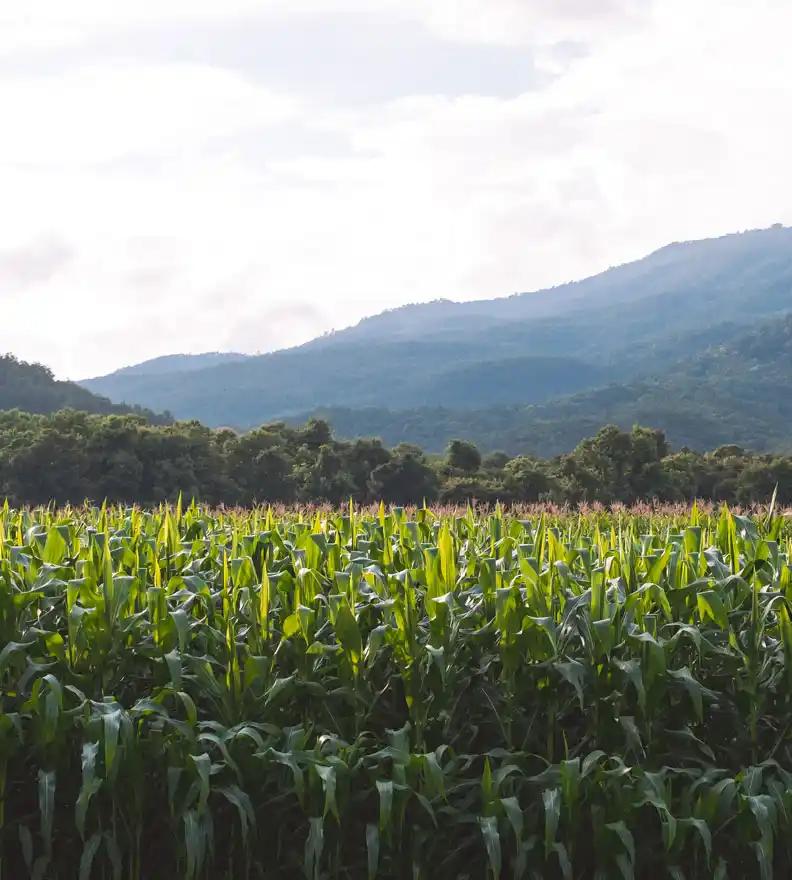
Corn is a warm-climate cereal with a short-day requirement that can be successfully grown in tropical, subtropical and temperate climate zones, in regions between 58o north and 40o south latitude except Antarctica, from sea level up to 4000 m altitude, in areas with a high duration of sunshine. It is an annual crop.
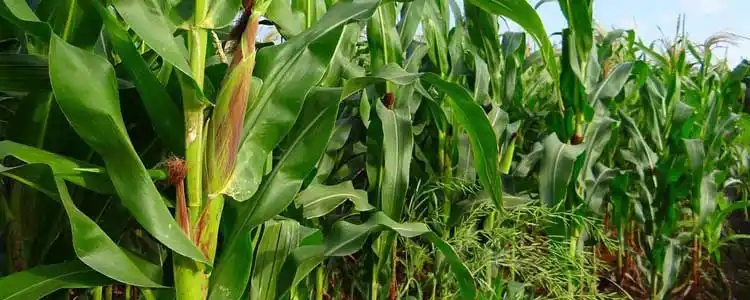
Corn can be successfully grown in almost all soil types that are rich in organic matter, have a deep profile, good drainage and aeration, no salinity problem, and are neutral in reaction (pH 6-7). It is not very selective in terms of soil. However, corn cultivation is not recommended in areas where salinity is high (> 1.7 Mmhos/cm) and groundwater is close to the surface, because the plant shows poor development under such conditions.
If the field where corn is to be sown is empty, that is, if it has been left fallow, it should be ploughed in autumn at a depth of about 20 cm with a mouldboard plough and left for the winter. In the spring period when sowing will be carried out, the soil surface should be loosened with a tool that works the upper part of the soil – for example, a cultivator – shallowly, the basal fertilizers that need to be applied before sowing and the herbicides that must be mixed with the soil should be applied and mixed with a harrow, and a flat seedbed should be prepared. If autumn ploughing could not be done, the first tillage in spring should be done with tools such as a chisel that split and shallowly work the soil instead of a mouldboard plough that turns the soil over.
In the past, mainly open-pollinated, low-yielding local village varieties were grown, but with the development of hybrid varieties, these local varieties have generally been replaced by hybrid corn varieties. Because the yield potential of hybrid varieties is much higher, the cultivated area of these varieties has been expanding every year. Hybrid varieties may be single-cross, double-cross, three-way or four-way crosses; however, today the most widely used in production are single-cross hybrid corns.
When selecting a variety, first of all, the adaptation ability of the variety to regional conditions should be investigated, and care should be taken that its days to maturity are suitable for the local climate. Modern corn varieties are classified into 8 groups according to the FAO system based on earliness or lateness. Among these groups ranging from FAO-100 to FAO-800, FAO-100 represents very early varieties (maturing in about 70-75 days), whereas FAO-800 represents very late varieties (maturing in about 140 days). Similarly, FAO-400 comprises medium-early (100-105 days) and FAO-600 medium-late (115-125 days) varieties.
In the Anatolian region, varieties in the FAO-500 and FAO-600 groups generally give more suitable results, while in our southern regions, where the growing period is longer, FAO-700 and FAO-800 groups may show higher performance.
When determining the variety, besides the suitability of the maturity period for the region, high yield potential, resistance to diseases and pests likely to occur in the region, and resistance to lodging are important criteria.
For corn seeds to germinate healthily and provide uniform emergence, the soil temperature at sowing depth should be at least 10-12oC. This must be taken into account when planning the sowing date. At sowing times below these temperatures, germination may be delayed, emergence may be uneven, or the seeds may rot before germinating. Therefore, for corn sowing, it is necessary to wait until the soil temperature reaches 10-12oC. Expressed as a calendar date; in the Thrace region, sowing as a main crop can generally start after 25 April, in our southern regions from the beginning of April, and in Central Anatolia after 25 April.
As a general rule for sowing time, it is safer to start sowing after the last frost date of the region. Because corn seedlings sown before the last frost date can suffer serious damage from frost that may occur in their young stages.
It is recommended that corn sowing be completed at the latest by the end of the first week or the middle of the second week of May. In sowings after these dates, the pollination period of the plant may coincide with a very hot and dry period; this may lead to insufficient pollination and fertilization and consequently a decrease in grain yield. Moreover, in late sowings, the maturity and drying and harvest periods may coincide with rainy seasons, increasing the risk that the crop remains in the field.
In our southern regions, second-crop corn sowings made until the end of June can give satisfactory grain yields, whereas second-crop corn sowings in the Thrace region usually cannot reach the desired yield level. If yield reduction is acceptable in this region, very early varieties may be used. If the aim is silage instead of grain, almost any corn variety can be sown as a second crop. Corn sown at the end of June or early July as a second crop in the Thrace region can be harvested as silage at the latest by the end of September.
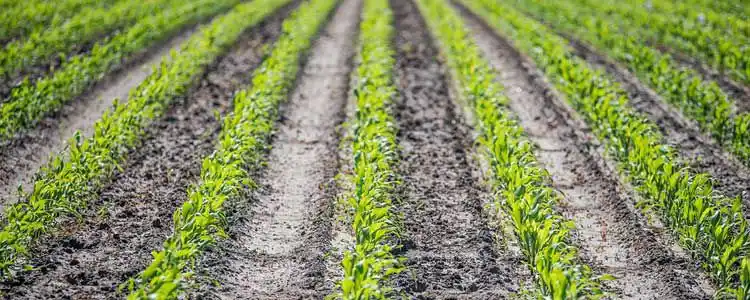
Today, except for compulsory broadcasting practices in areas where mechanization is not available or the land is not suitable for mechanized agriculture, corn is generally sown with pneumatic (air) seeders, which allow the desired row spacing and within-row spacing to be easily adjusted.
In row sowing, a row spacing of 70 cm and within-row spacing of 25 cm is usually preferred. With this arrangement, approximately 6,000 plants per decare are obtained. Studies for high grain yield have shown that an optimum plant density is 6,000-7,000 plants per decare. However, it is known that high yields can also be obtained under suitable conditions even at planting densities of 8,000-9,000 plants per decare.
If the aim of corn sowing is to obtain silage, row spacing and plant spacing can be somewhat reduced. For example, row spacing can be reduced to 60 cm and within-row spacing to 15-20 cm. In this case, since the number of plants per decare will increase, the plants will have thinner stalks, be taller, and have more leaves; this is an important factor increasing silage yield.
For grain production in corn sown in a 70 cm x 25 cm pattern, depending on the thousand-kernel weight of the variety, 2-3 kg of seed per decare is sufficient.
In fields where corn is grown, to ensure healthy development of the plants, a production environment in which corn does not compete with other plants, i.e. an environment where only corn plants are present, should be targeted. Plants defined as weeds share soil water and nutrients with corn, weakening it, and also provide shelter for many disease agents and harmful insects, which can cause serious yield losses. Therefore, effective weed control is essential.
Herbicides used in weed control are evaluated in three groups according to application time: those incorporated into the soil before sowing, those applied after sowing but before emergence, and those applied after emergence directly onto the green parts of weeds.
In our country, the most preferred method is pre-emergence soil surface spraying. Immediately after corn sowing, before the plants emerge, the soil surface is sprayed. For the control of annual narrow- and broad-leaved weeds, a product called “Primextra” is used at a dose of 500 ml per decare. On very heavy soils, the dose is increased to 600 ml/da, while on sandy or very low organic matter soils (around 0.5%), 350 ml/da is sufficient. A product called “Guardian” can also be preferred for pre-emergence applications.
If after corn emergence, when the plants reach 15-20 cm in height, there is dense broad-leaved weed infestation on the soil surface, herbicides containing “2,4 D amine” can be used at a dose of 100-150 ml per decare.
Pesticide companies from time to time introduce new herbicides with different formulations. Therefore, to obtain information about the most up-to-date and possibly more effective herbicides, it is beneficial to consult the nearest agricultural institutions or pesticide dealers.
Nowadays, in corn farming, there are also transgenic (genetically modified) corn varieties developed through biotechnological methods for weed control purposes. In these varieties, the herbicides used kill the weeds without damaging the corn plant. However, it should not be forgotten that discussions about the use of such varieties are still ongoing.
Throughout its growing period, corn can be exposed to the attacks of various diseases caused by fungi, bacteria, viruses, nematodes and similar agents, as well as different pests.
Although their frequency varies depending on the climatic characteristics of regions, the most common diseases in corn cultivation include rots occurring in the roots, stalks, ears and grains; leaf blights caused by Helminthosporium spp. pathogens (H. maydis, H. turcicum); and smut disease (Ustilago maydis), which can cause significant reductions in grain yield.
In addition to diseases, some pests can also cause serious problems in corn fields. Aphids (Aphid maidis), which feed by sucking plant sap and are more common in cool and humid weather; red spider mites (Tetranychus spp.), which increase in hot and dry weather; the green worm (Heliothis armigara) and the striped leafworm (Spodoptera), which damage by feeding on green plant parts; and, in some regions, the European corn borer (Östrinia sp) and the corn earworm (Sesamia sp), which open galleries in the stalk and ear and cause significant losses, are among the important pests.
The first step in disease and pest control is to prioritize resistant species and varieties when choosing a variety. If resistant varieties are available, they should definitely be preferred. If there is no suitable resistant variety, crop rotation should be practiced, and seed treatment should be applied before sowing to take precautions against both diseases and soil pests. After harvest, collecting and destroying plant residues left in the field and preventing the plants from becoming weakened during the growing period through balanced fertilization are also important preventive practices.
Despite all these preventive measures, if diseases and pests occur, chemical control should be resorted to. For this, fungicide preparations can be used against diseases and insecticide preparations against pests.
As in weed control, transgenic corn varieties resistant to some pests have also been developed as a result of biotechnological studies. In these varieties, thanks to the gene introduced into the plant, pests such as the corn stalk borer and the ear borer cannot feed on the plant and cannot cause damage; in a sense, the plant produces its own protective substance. However, discussions about the use of genetically modified varieties continue, and their use in production is currently not permitted in our country.
The most sensitive period in terms of irrigation in corn is the flowering stage. A water deficit during tassel emergence and pollination reduces the number of kernels on the ear and causes significant yield loss.
Table 1. Plant water consumption values of corn
|
Months |
Plant Water Consumption (mm) |
Average Rainfall (mm) |
Irrigation Water Requirement (mm) |
|
May |
63,5 |
42,7 |
20,8 |
|
June |
140,6 |
31,2 |
109,4 |
|
July |
188,8 |
10,5 |
178,3 |
|
August |
179,5 |
9,1 |
170,4 |
|
TOTAL |
572,4 |
93,5 |
478,9 |
Plant density should be adjusted so that, depending on the variety, spacing within the row is 25-30 cm and row spacing 70 cm, aiming for 4500-5500 plants per decare. Sowing depth should be about 5 cm, and corn sowing should start when the soil temperature reaches at least 10 ⁰C. Under Central Anatolian conditions, the most suitable sowing time is the first half of May, when the soil temperature is 13-15 ⁰C.
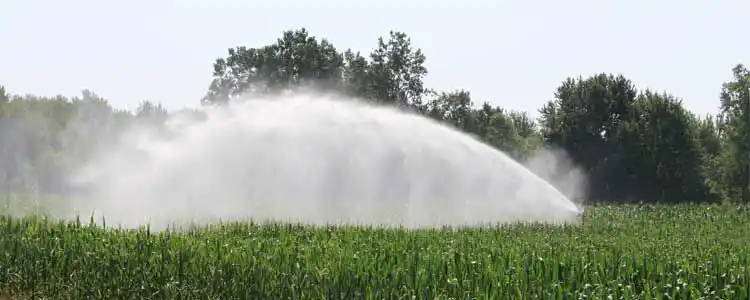
Plant water consumption is the total amount of water lost through soil evaporation and plant transpiration. Table 1 shows that total plant water consumption of corn under Konya conditions is 478,9 mm.
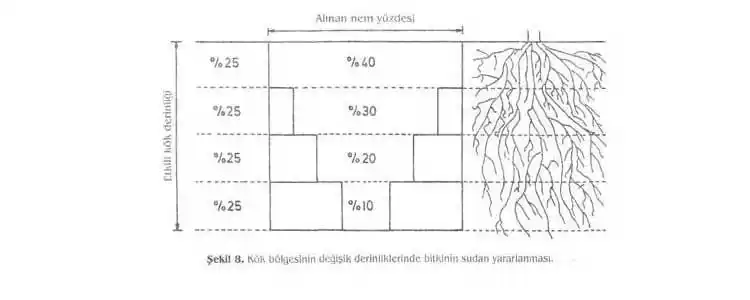
With the germination of the corn seed, rapid development begins in the root system, and about 7 weeks after emergence, at the time of top-dressing, the root system reaches its most developed state. The effective root depth of the corn plant is about 60 cm, but most of the fine roots are concentrated in the first 40 cm from the surface. Therefore, when preparing a drip irrigation program, the effective root depth should be taken as 40 cm, and irrigation should begin when 50% of the water at field capacity has been depleted.
Table 2. Emitter spacing (cm) according to soil intake rate and emitter discharge
|
Discharge l/h |
Soil Intake Rate (mm/h) |
|||||||||||
|
5 |
10 |
15 |
20 |
25 |
30 |
35 |
40 |
45 |
50 |
55 |
60 |
|
|
1,6 |
40 |
28 |
23 |
20 |
18 |
16 |
16 |
14 |
13 |
13 |
12 |
12 |
|
2,2 |
67 |
40 |
33 |
28 |
26 |
23 |
22 |
20 |
19 |
18 |
17 |
16 |
|
2,6 |
65 |
46 |
37 |
32 |
29 |
26 |
25 |
23 |
22 |
21 |
20 |
19 |
In drip irrigation systems, in light-textured sandy soils one drip line is laid for each row, while in heavier textured soils it is possible to lay one line for every two rows. Laying a separate line for each row in heavy-textured soils provides more controlled irrigation of the wetted area and contributes to reducing the amount of water and energy used. The maximum lateral length of drip irrigation pipes varies depending on factors such as pipe diameter, emitter discharge, emitter spacing, whether emitters are pressure-compensating and the operating pressure. The maximum lateral lengths of non-pressure-compensating flat drip pipes with different emitter spacings and discharges are given in the table below.
|
Flow Variation % |
Emitter Spacing (cm) and Discharge (l/h) |
|||||||||||
|
25 cm |
30 cm |
40 cm |
50 cm |
|||||||||
|
1,6 |
2,2 |
2,6 |
1,6 |
2,2 |
2,6 |
1,6 |
2,2 |
2,6 |
1,6 |
2,2 |
2,6 |
|
|
5,0 |
104 |
72 |
118 |
80 |
153 |
106 |
164 |
119 |
||||
|
7,5 |
116 |
81 |
130 |
89 |
180 |
118 |
185 |
134 |
||||
|
10,0 |
124 |
85 |
140 |
94 |
182 |
124 |
198 |
141 |
||||
|
15,0 |
145 |
91 |
155 |
102 |
200 |
137 |
220 |
156 |
||||
It is recommended to start irrigation when 50% of the water at field capacity has been depleted within the effective root depth of the corn plant. Considering a soil depth of 40 cm, the amount of water allowed to be depleted can be taken as 40-45 mm for medium and heavy-textured soils and 25-30 mm for light-textured soils. In Central Anatolia, irrigation intervals and numbers in corn-growing medium and heavy-textured and light-textured soils are given in the following table.
|
Months |
Low Intake Rate, Medium and Heavy (Clay) Textured Soils |
High Intake Rate, Light (Sandy) Textured Soils |
||
|
Irrigation Interval (days) |
Number of Irrigations |
Irrigation Interval (days) |
Number of Irrigations |
|
|
May |
- |
1 |
- |
1 |
|
June |
10 |
2 |
7-8 |
2 |
|
July |
7-9 |
3-4 |
5-6 |
5-6 |
|
August |
8-9 |
3-4 |
6-7 |
4-5 |
|
September |
1 |
1 |
||
|
TOTAL |
10-12 |
13-16 |
||
To obtain 1000 kg of grain corn per decare, approximately 20-24 kg/da of phosphorus and 26 kg/da of potassium are removed from the soil as pure nutrients. Fertilization must be planned according to soil analysis results; amounts of nitrogen and phosphorus fertilizers should be adjusted by considering the phosphorus level and organic matter content of the soil. Since Turkish soils are generally rich in potassium, this nutrient should be applied only in the amount needed.
Applying 5-6 tons of farmyard manure, 2-3 tons of poultry manure or 2 tons of compost per decare before sowing increases yield and improves soil structure as both an organic matter and plant nutrient source. When organic matter is applied, the amount of chemical fertilizer to be used can be reduced by at least half thanks to the nutrients contained in these materials. However, excessive poultry manure should not be used to avoid salt accumulation in the soil.
Table 3. Fertilizers to be applied at sowing according to the phosphorus content in the soil
|
Phosphorus (kg/da) |
Fertilizer Type |
Dose (kg/da) |
|
0 |
DAP (18-46-0) |
20 |
|
3-4 |
20-20-0+Zn |
20 |
|
5-6 |
20-20-0+Zn |
15 |
|
7-6 |
20-20-0+Zn |
10 |
|
>9 |
Ammonium Sulphate (21% N) Ammonium Nitrate (26% N) Ammonium Nitrate (33% N) |
20 15 12 |
Recommendation: It is strongly recommended that phosphorus fertilizers be applied to the soil as a basal dose together with sowing.
The remaining part of the nitrogen requirement should be completed, according to the nitrogen fertilization program given in Table 4 for each irrigation, until about 1 month before harvest. In drip irrigation systems, nitrogen fertilizers can be applied as pure nutrient at 2 kg/da in 9 irrigations in heavy-textured soils and at 1.5 kg/da in 12 irrigations in light-textured soils.
Table 4. Nitrogen fertilization program in corn (kg/da)
|
Fertilizer Type |
Medium and Heavy-Textured Soils |
Light-Textured Soils |
|
Ammonium Sulphate (21% N) |
10,0 |
7,5 |
|
Ammonium Nitrate (26% N) |
7,5 |
6,0 |
|
Ammonium Nitrate (33% N) |
6,0 |
4,5 |
|
Urea (46% N) |
4,0 |
3,0 |
Corn harvest should be carried out when the kernels on the ear have completed their physiological maturity and the grain moisture has fallen below a certain level. The healthiest method is to take a certain number of ears from a field that appears mature, thresh them and measure the moisture content of the kernels. In cases where this is not possible, the presence of a “black layer” at the point where the grain is attached to the cob should be checked.
Whether corn has reached full maturity is understood by the black layer formed at the point where the kernels are attached to the cob. If at least 3 out of 4 kernels randomly taken from the middle part of the ear show a black layer, corn has completed its physiological maturity. At this stage, grain moisture is about 30-35% and is suitable for hand harvest.
Corn harvest can also be easily carried out with wheat-barley combines with some modifications. For this, equipment that can better grasp the corn stalks should be mounted on the front of the cutter bar of the machine. For mechanical harvest, it is generally recommended that the moisture content of corn kernels be between 20-25%. In overly dried ears, kernel breakage during harvest may increase.
In harvests carried out at high moisture, some losses may occur and the product obtained must be dried to an appropriate moisture content before storage, which causes additional costs. Therefore, if climatic conditions permit, another option is to delay harvest for a while so that the ears can dry naturally in the field.
If the product is moist after harvest, it must be dried before storage. Today, grain drying machines are available in many places. If the product is to be stored for less than 6 months, the moisture content should be reduced to 15%; for longer storage periods, it should be reduced to 13-14%.
In drying products intended for seed, care must be taken to ensure that the embryo is not damaged. For this purpose, the drying temperature should not exceed 36oC. Higher temperatures can be used for drying corn kernels intended for feed or non-seed purposes.
If harvest is to be carried out for silage purposes, cutting should be done with a silage machine by chopping the plants when the ears are between the milk and dough stages, that is, before the kernels have completely hardened.
