

Suplas is an agricultural irrigation brand developed with the long-established engineering, production, and R&D experience of Akplas, operating in the sector since 1989.


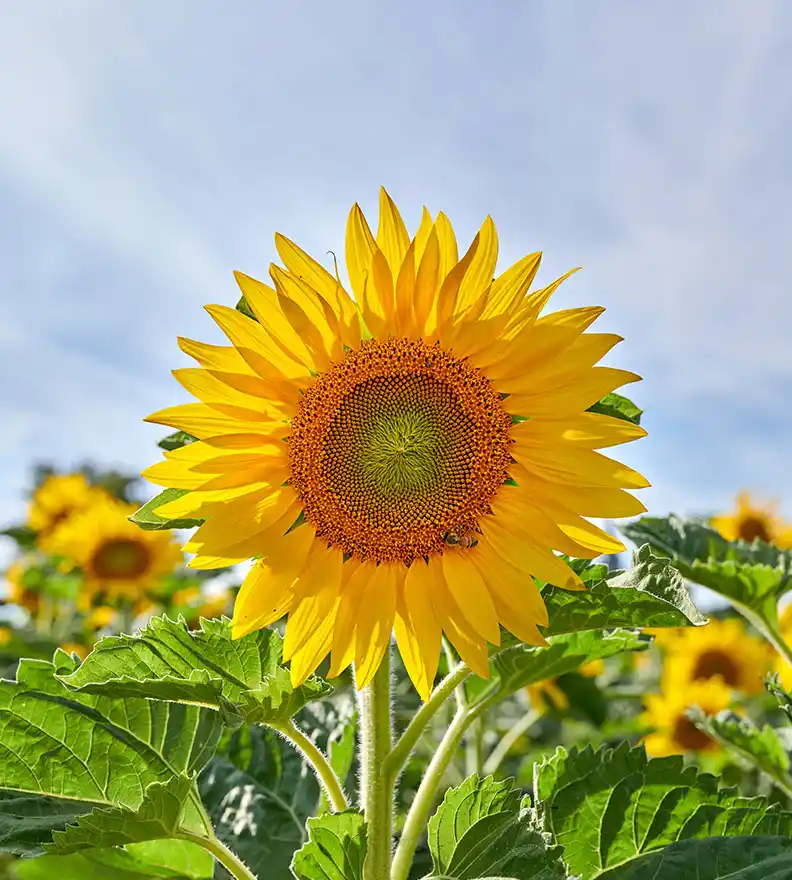
Sunflower is one of the most important oilseed crops in the world and in our country, and in Türkiye it is mostly grown for oil production. In recent years, world sunflower production has been around 23 million tons, and Türkiye ranks among the top ten countries in terms of both production and cultivated area. While oilseed sunflower production in our country is mainly concentrated in the Thrace-Marmara Region, confectionery sunflower production is carried out predominantly in the Central Anatolia and Eastern Anatolia Regions and to a lesser extent in other regions.
In our country, the sown area of oilseed sunflower has varied between 500-600 thousand ha in recent years depending on climatic conditions and price policies, while the production amount has been around 600-850 thousand tons. Since it is a plant highly suitable for mechanization and does not require much labor, sunflower cultivation areas are increasing in different regions every year. The center of origin of sunflower is North America, and wild forms can still be found in the central parts of the USA. Although it has a long and complicated history as an economic crop, the exact place and time of its first cultivation are not clearly known. Before the first migrations to the New World, Native Americans in North America mostly used sunflower as a raw material for dyes. The sunflower seeds brought from North America by Spanish travelers in the 1850s were first grown as ornamental plants in gardens in Spain. The use of sunflower as an oil crop began first in Russia and later spread throughout Europe. After World War II, between 1945-50, sunflower cultivation was introduced to our country and began to spread with the seeds brought by our citizens who migrated from Bulgaria to Türkiye. The main significant increase in production and cultivated area occurred after the 1980s with the introduction of hybrid varieties into our country. High oil content and high seed-yielding varieties developed by sunflower breeders in the world have noticeably increased production, and hybrid sunflower varieties developed over the last 20 years have contributed to raising production to the desired levels.
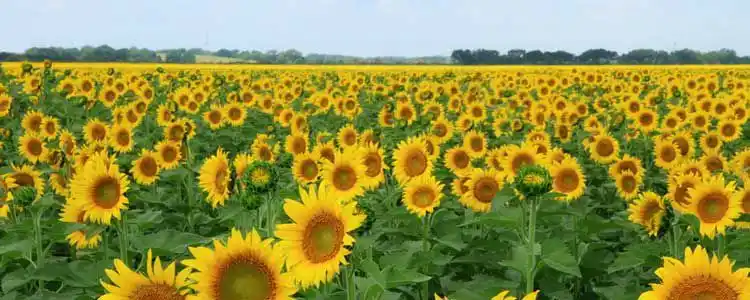
Sunflower is an annual crop grown in continental climate zones and in the rainy regions of temperate climates, and it has a wide adaptation capacity. During its vegetative period of approximately 120-130 days, its total heat requirement is around 2600-2850oC. For the seed to germinate, the soil temperature must be at least +4oC, and for normal germination the soil temperature should reach at least 10-12oC.
Sunflower plants are quite tolerant to low temperatures during the seedling stage. At the cotyledon leaf stage, they can withstand temperatures down to -5oC without damage. However, this tolerance gradually decreases when the plant reaches the 6-8 leaf stage. At more advanced growth stages, the plant can even be damaged at 0oC.
For plant growth and development, night temperatures of 18-20oC and daytime temperatures of 24-26oC provide the most favorable conditions. At temperatures exceeding 36-40oC, pollen germination is adversely affected and cross-pollination cannot occur adequately.
Although sunflower is not absolutely drought-resistant, it can still be successfully grown under conditions where many other cultivated plants cannot develop. The root system can reach depths of about 2 m, which allows it to efficiently utilize soil water. For this reason, it is not greatly affected by short-term drought periods.
During the growing season, sunflower requires a total of about 500-600 mm of precipitation. It is important that this rainfall is distributed evenly throughout the vegetation period.
The plant’s water requirement varies at different growth stages. From emergence to the beginning of head (capitulum) formation, approximately 20% of the annual total water consumption is used.
Sunflower needs the most water during the roughly 40-day period before flowering and the 40-day period after flowering. During this critical stage, about 60% of the annual total water consumption occurs. If the plant enters water stress during flowering, this leads to significant reductions in yield.
Sunflower does not like excessively humid regions. High relative air humidity causes diseases such as head rot to occur more severely.
Sunflower is not a very demanding crop in terms of soil. It can be successfully grown in many different soil types, from sandy to clayey soils. However, deep-profile, organic matter-rich and alluvial soils are particularly suitable for sunflower cultivation. It does not like excessively stony, overly sandy, and shallow soils. A soil pH of 6.0-7.2 is preferred. In areas where sunflower will be grown, the groundwater level should not be high and there should be no drainage problems. Sunflower does not tolerate salinity well; it can withstand salt concentrations of 2-4 mmhos/cm.
After a suitable seedbed is prepared, sunflower is generally sown with pneumatic seed drills (machines that place seeds one by one using air flow). Studies have shown that ploughing with a moldboard plough in autumn, followed in spring by seedbed preparation with a cultivator and then a harrow, is the most economical soil tillage method. In weed control, herbicides containing trifluralin applied before sowing are generally preferred; in addition, there are herbicides used before and after emergence. After herbicide application before sowing, the soil must be mixed with a harrow or other secondary tillage implement, and sowing should be done 2 days later so that the herbicide is well distributed throughout the profile. Furthermore, for weed control, when the plants reach a height of 25-30 cm, inter-row cultivation should be performed with a hoeing machine, and weeds remaining on the row should be removed by hand hoeing. Cocklebur, bindweed, mustard, field bindweed, knotgrass, quackgrass, lambsquarters, chamomile, and foxtail are among the important weeds frequently encountered in sunflower fields.
Farmers need to consider multiple criteria when selecting hybrid varieties. First, the seed price and yield potential should be evaluated. In variety selection, the trial results of research institutes operating in the region, data from demonstration studies conducted by provincial and district directorates of agriculture, and yield trials of private companies can be guiding. In addition, the resistance of the variety to diseases prevalent in the region is an important criterion. Since farmers generally quickly switch to soil preparation for wheat sowing after harvest, late and very late varieties are not preferred much. Therefore, earliness is also an important characteristic. The selection of productive hybrid seeds suitable for local conditions and the implementation of recommended techniques are critical for profitable sunflower production. Seeds to be sown should be of high quality, have high germination power, be pure, disease-free, and free from weed seeds to reduce production risks. Hybrid seeds produce more uniform plants compared to open-pollinated varieties and provide a distinct yield advantage. Hybrid sunflower varieties have high yield potential, flower and mature at the same time, and produce products of similar quality.
Especially in years when climatic conditions are favorable for sunflower, the yield advantage of hybrid varieties becomes even more striking. There are many different oil-type hybrid sunflower varieties belonging to various companies on the market. In the variety to be selected, a slightly drooping, downward-facing head is preferable in regions with intense bird damage, as this reduces bird damage and sunburn; therefore, such hybrids should be chosen in those areas. Seed size and thousand-kernel weight are also important factors affecting yield. Good self-pollination capacity of the hybrid is necessary to obtain high yields even when bee and insect populations are insufficient. The widespread technical support services provided by seed companies are a significant advantage in solving problems that may arise after sowing and during the growing period. In addition, good stem strength and a strong root system in the variety increase its resistance to strong winds.
Particularly after rainfall, strong winds can cause lodging in the plants. While hybrid seeds are marketed abroad based on the number of seeds in the bag, in our country they are sold in seed size grades numbered from 1 to 5 (1 being the largest, 5 the smallest). Although large seeds may have slightly higher germination power under unfavorable climate and soil conditions, they increase the amount of seed sown per decare and thus cause additional costs. Therefore, medium-sized seeds are more economical. However, it should be noted that there is no complete standardization between companies in seed size classification. All hybrid seeds are treated with fungicides against downy mildew. According to research, when sowing is done with 70 cm row spacing and 30-35 cm in-row spacing, obtaining 4500-5000 plants per decare results in the highest yield. Depending on seed size, the amount of seed sown is about 400 g/da. Since sunflower removes significant amounts of nutrients from the soil, successive sunflower cultivation in the same field should be avoided. In dryland areas, a Wheat-Sunflower rotation is generally practiced, while in irrigated areas it can be included in rotation with sugar beet, forage crops, and maize. In addition, in our country, sunflower can be grown as a second crop after harvest of wheat or other winter crops.
According to the data in Table 1, sunflower crop water consumption in Türkiye is 615 mm and the irrigation water requirement is 506.9 mm..
|
MONTHS |
CROP WATER CONSUMPTION (mm) |
AVERAGE PRECIPITATION (mm) |
IRRIGATION WATER REQUIREMENT (mm) |
|
APRIL |
15.0 |
42.4 |
- |
|
MAY |
57.5 |
42.7 |
14.8 |
|
JUNE |
175.2 |
31.2 |
144.0 |
|
JULY |
217.8 |
10.5 |
207.3 |
|
AUGUST |
149.9 |
9.1 |
140.8 |
|
TOTAL |
615.4 |
135.9 |
506.9 |
By designing the irrigation schedule correctly, a constant soil moisture level can be maintained in the root zone that will not put the plant under stress. In a soil depth of 60 cm, the amount of water allowed to be depleted can be taken as 45-55 mm for medium and heavy-textured soils and 30-35 mm for light-textured soils.
In Central Anatolia, irrigation interval and number of irrigations on medium and heavy-textured soils with low intake rate and on light-textured soils with high intake rate are given in Table 2.
|
MONTHS |
MEDIUM AND HEAVY-TEXTURED SOILS WITH LOW WATER INTAKE RATE |
LIGHT-TEXTURED SOILS WITH HIGH WATER INTAKE RATE |
||
|
IRRIGATION INTERVAL |
NUMBER OF IRRIGATIONS |
|
|
|
|
APRIL |
- |
1 |
- |
1 |
|
MAY |
- |
- |
- |
- |
|
JUNE |
(10-12) |
(2-3) |
(8-9) |
(2-4) |
|
JULY |
(8-10) |
(3-4) |
(6-7) |
(4-5) |
|
AUGUST |
(8-10) |
(2-3) |
(6-7) |
(4-5) |
|
TOTAL |
|
(8-10) |
|
(11-15) |
WATER RETENTION
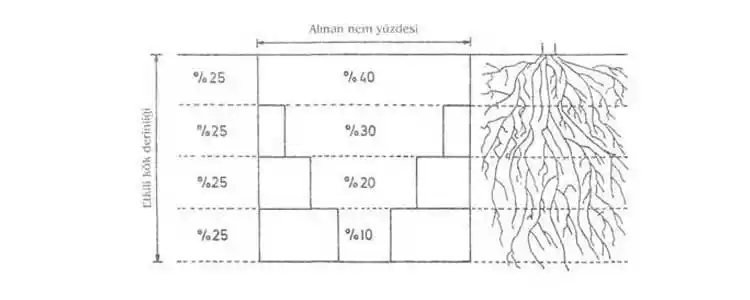
NOTE: The effective root depth of sunflower is 90-120 cm, and most of the fine roots are concentrated at a depth of 0-60 cm. Therefore, in the drip irrigation program of sunflower, the effective root depth is taken as 60 cm, and irrigation is recommended to start when 50% of the water at field capacity has been depleted…
The period between the stage when head formation begins before flowering and the milk ripening stage is when sunflower is most sensitive to water. Water shortage occurring during this period can cause irreparable yield losses.
The water requirement of sunflower reaches its highest level especially around flowering. During this stage, the irrigation requirement must be met on time without putting the plant under stress, and irrigation must be completed without delay.
One of the most important pests of sunflower under the conditions of our country is the Orobanche parasite (broomrape). However, there are broomrape-resistant hybrid varieties available on the market. In addition, other diseases that may be problematic in certain years and regions include sunflower downy mildew, stem, root, and head rots. In years when the summer is rainy, head rots caused by Rhizopus and Botrytis can be seen intensively. The downy mildew disease, which causes significant problems in sunflower, is largely controlled by treating hybrid seeds with Metalaxyl.
Especially in irrigated areas, there is no resistant variety against Sclerotinia root and stem rot, and there is also no chemical control method available that is highly effective against this disease.
At present, there are no sunflower pests in our country that exceed the economic damage threshold on a large scale.
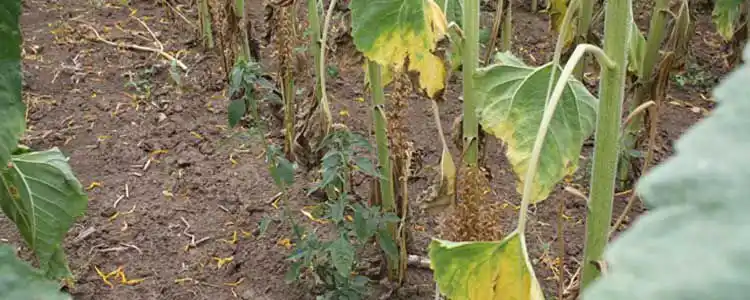
Alternaria species can cause damping-off and rotting of seedlings. On the green parts of the plant (stem, leaves, head), dry lesions and velvety-looking mold spots develop. Flower tissues and floral parts can also become infected. When the fungus reaches the seed, the seed becomes contaminated, which reduces both quality and yield. It is generally more common in plants that have already been weakened by other factors.
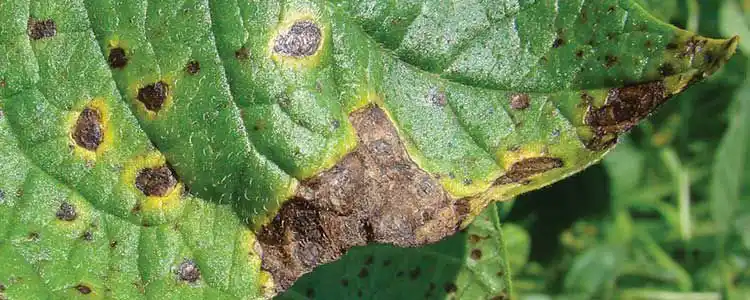
The disease caused by Phoma species appears as brown-black lesions on the above-ground parts of the plant, especially at the base of the petioles. In these areas, stem tissue turns brown and becomes brittle due to the drying effect of the fungus; as a result, the plant may be lodged or broken. The optimum temperature for fungal development is around 25 °C. This disease does not yet have economic importance in our country.
To ensure the cleanliness of drip irrigation pipes and to meet the plant nutrient requirements, an application of PHOSPHORIC ACID or NITRIC ACID should be made at certain intervals during the irrigation season. This application is carried out every 15-21 days during the season at a rate of 1 liter per decare. Before injecting acid into the system, clean water is supplied until the operating pressure is reached; then acid is applied for half an hour. Afterwards, to ensure that no acidic water remains in the pipes, clean water must be run through the system for at least half an hour (or longer depending on field conditions).
Three or four times during the irrigation season, the ends of the pipes should be opened and the system should be run until clean water flows out, in order to remove sediment and dirt accumulated inside the pipes.
The most suitable fertilizers for drip irrigation are the following:
Water-soluble granular or powder fertilizers are recommended for fertigation. The required amount of fertilizer is placed in the fertilizer tank; the tank lid is tightly closed, the main valve is partially closed, and the fertigation valves are opened. After the fertilizer application is completed, clean water is run through the system for a while so that no fertilized water remains in the pipes.
Fertilizers other than those listed above and fertilizers that do not dissolve completely in water are not suitable for drip irrigation systems. If it is absolutely necessary to use such fertilizers, they must first be dissolved in a separate container and the solid parts filtered out before being added to the fertilizer tank. For example, UREA and AMMONIUM SULFATE do not completely dissolve in water; if they are to be applied via drip irrigation, they must be dissolved and filtered beforehand.
Throughout the irrigation season, an INSECTICIDE application should be carried out to prevent insect damage that may occur in drip irrigation pipes. Insecticide can be applied at the first irrigation and then every second irrigation, using the insecticides listed below through the fertilizer tank.
Ø Insecticides containing ENDOSULFAN, such as Thiodan 35 EC, Hektionex 35 EC at 75 g/da
Ø Insecticides containing MALATHION, such as Malaton 60 EC, Hektion 60 EC at 100 g/da
Particular care should be taken against insect damage, especially during periods when irrigation is not being applied. Damage usually increases when pipes are left unused for long periods.
At the end of the season, when pipes are removed from the field, care should be taken not to cause mechanical damage by winding them onto very narrow-diameter reels. The collected reels should be stored in such a way as to protect them from rodents such as mice.
In addition to the fertilizers used in standard irrigation systems, the application of fertilizers such as Mono Ammonium Phosphate (MAP), Mono Potassium Phosphate (MKP), Potassium Nitrate, 33% Ammonium Nitrate, Phosphoric Acid, Nitric Acid, etc., via drip irrigation can reduce flower and fruit drop caused by drought and excessive heat in fruits and vegetables and increase yield. During the period close to harvest, using potassium-based fertilizers improves fruit quality characteristics (color, firmness, sugar content) and higher market value products can be obtained.
One of the most important moves that producers can make against rapidly increasing fertilizer, fuel, and labour costs today is to increase the yield per unit area by 20-50% and to obtain export-quality products, thereby increasing profitability.
In drip lines used under plastic or other covers, burns that occur on the pipe surface as a result of water droplets formed by evaporation or condensation acting as lenses and focusing sunlight are called “mech burn”.
As a solution, drip lines should be kept under black plastic covers or buried beneath the soil surface during irrigation. When transparent covers are used, the risk of mech burn is very high.
Under favorable climatic conditions, a grain yield of about 250-300 kg/da can be obtained from sunflower under dry conditions and on normally fertile soils. In irrigated areas, however, grain yield may vary between 350-500 kg/da depending on soil fertility and the number of irrigations.
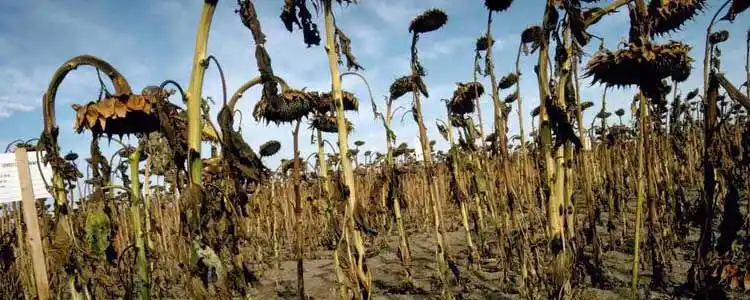
The fact that the back of the sunflower head and about 50% of the bracts around the head turn brown and that the seed moisture content drops to 35% approximately 1-1.5 months after flowering indicates that the plant has reached physiological maturity. However, for harvest to be performed, the head, stem, and leaves must have completely turned brown and the seed moisture content should be reduced to 9-10%. Since sunflower seeds are oily, if they are stored at high moisture, heating and deterioration occur in a short time. For this reason, it is very important that the seed moisture is reduced below 10% at harvest.
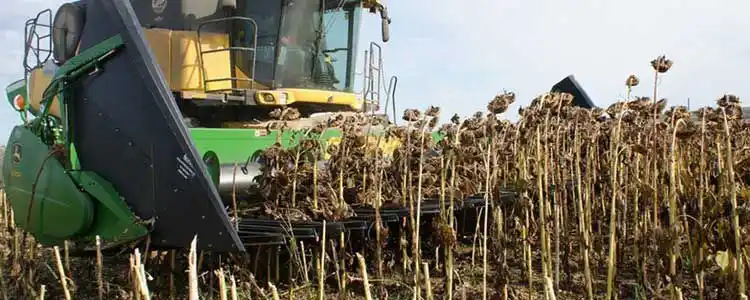
Combine harvesters used for wheat harvest can be adapted for sunflower harvest with appropriate header attachments. In the first stage, the header must be adjusted to harvest sunflower rows. These attachments are set to collect only the heads, leaving the stems in the field. A harvest loss of about 3% is considered normal. If the combine is operated too fast, seed losses can reach high levels such as 15-20%.
Since delaying harvest can cause seed shattering, especially in some varieties, sunflower should be harvested on time. In our country, sunflower sown between early April and mid-May is usually harvested between late August and September. It has an average growing period of 120-130 days. The length of this period may vary depending on summer temperatures, rainfall and humidity, as well as soil nutrient content. For proper storage, seed moisture should be below 10% and seeds should be clean. At moisture levels below 8%, disease and pest activity in storage comes to a standstill, and reproduction and damage of storage pests are prevented. Seeds stored at 11-12% moisture after harvest should be frequently aerated, kept cool, and prevented from heating. The presence of large amounts of flower, leaf, and stem debris in storage adversely affects oil quality.
REFERENCES
Prof. Dr. Halis ARIOĞLU
